Bali Travel Guide for First Timers - Everything You Need to Know Before You Go

With this Bali travel guide for first timers, I’m sharing everything I researched and experienced in Bali, from visa stuff and transport tips to avoiding Bali Belly and understanding the local culture.
Bali is one of those places you’ll either fall in love with instantly or find a bit overwhelming, especially if it’s your first time and your expectations are shaped by dreamy Instagram photos of stunning views and cultural landmarks.
To help make your first trip more enjoyable (and a little less confusing), there are a few things you should know before you jump on that plane. This Bali travel guide for first timers includes all my personal tips to help you avoid the stress and make the most of your adventure.
Visa Requirements: What You Need to Enter Bali
Before you visit Bali, you need to know what documents are required to enter the country. For many nationalities, the process is pretty straightforward, but not everyone needs a visa.
Here are the four key things to prepare ahead of your trip:
- Electronic Visa on Arrival (e-VoA) – $35 USD
- Tourist Levy – $10 USD
- Health Declaration – Submit online 72h before you fly
- Custom Declaration – Also done online 72h in advance
Check out my full guide to Bali visa requirements for step-by-step instructions on each one.
When to Visit Bali: Best Seasons & Months to Avoid
While Bali sounds like a dream destination year-round, not all months are ideal for travel. The island has two main seasons: the dry season and the monsoon season.
- Monsoon Season (November–March): during this period you can expect frequent rain. While you might get lucky with a sunny day, heavy showers can easily mess up your plans.
- Dry Season (April–October): this is the best time to visit, however keep in mind that July and August are peak tourist months. Everything gets more crowded and prices go up.
My personal recommendation is to plan your trip for May, June, September, or October. I went in June and it still felt overwhelming at times but definitely fewer crowds, better deals, and great weather.
Accommodation in Bali: Where to Stay
No matter if you’re on a tight budget or looking for those dreamy jungle villas with a private pool, Bali has it all. My go-to platform for finding accommodation is Airbnb, so i would recommend using it. It’s perfect for if you are a solo travelers, couples and groups of friends
You can find stunning houses in every part of Bali. Trust me, some of them are jaw-droppingly beautiful!

Health & Travel Insurance: Don't Skip It
When you’re visiting a new country, travel insurance is a must. There’s always a chance you might have to cancel or cut your trip short and I’m pretty sure you don’t want to be stuck paying cancellation fees out of pocket.
On top of that, travel insurance can be a real lifesaver when it comes to unexpected medical expenses. Most regular health plans don’t cover treatment abroad, so it’s important to have coverage for all those things that can pop up while you’re on the road.
And let’s not forget the not-so-fun stuff like lost passports, stolen laptops, delayed or canceled flights, and other little disasters that can ruin your plans.
My advice is to get it, even if you never need it. It’s so much better to be safe than stressed.
One well-known option is World Nomads just make sure your country is on their eligibility list.
Grab and Gojek: Your Transport Lifesavers
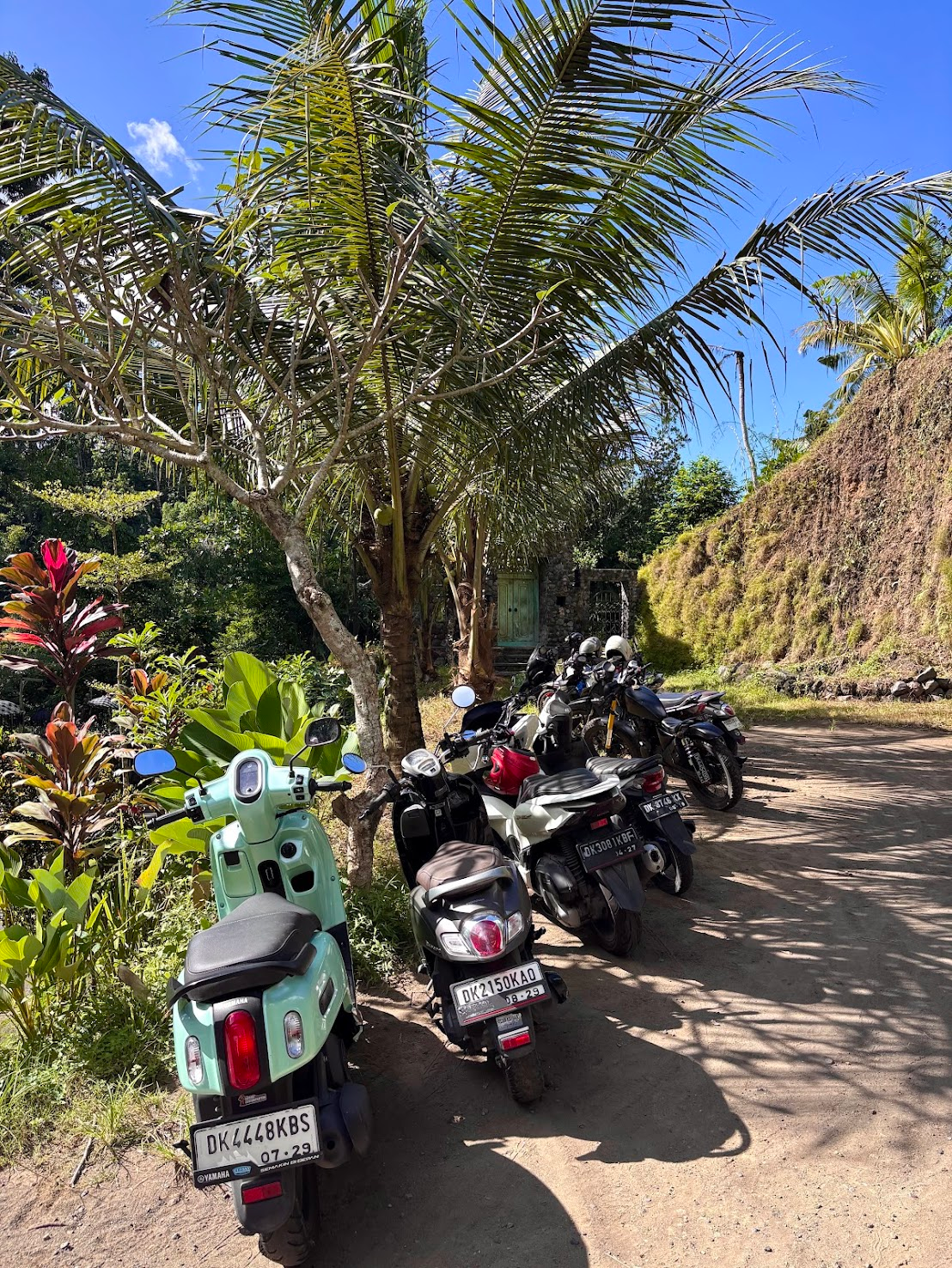
These two apps are absolute game changers when it comes to getting around Bali.
- Grab – I used this a lot. It’s perfect for ordering cars or scooters.
- Gojek – Another great app which was also recommended to me by the locals and we tested it.
What I noticed is that many drivers work on both platforms to stay busy.
If you’re alone or with one other person, scooters are faster in Bali’s crazy traffic.
You can also use both apps to order food from local restaurants.
Internet Access: E-sim & VPN Tips
When it comes to staying connected in Bali, Airalo is my top pick. It’s an easy-to-use app that offers affordable e-sim options. Just make sure your phone supports e-sim before buying. If not, don’t worry, you can still buy a physical SIM card with data at the airport or even local shops.
Also, don’t forget a VPN , you might want to watch your favorite shows on Netflix or access certain websites, a VPN like ExpressVPN will help you out in those situations and others of course
Prices & Taxes: Be Ready for the Extras
As a first-time visitor, I was really surprised by the taxes and service charges added to almost everything, especially in restaurants, cafes, and even supermarkets.
Usually, menus will mention taxes at the top or bottom. You might see:
- Service tax: 5–10%
- Government tax: up to 10%
- Card payment fee: often an extra 3%
Always double-check before ordering, so you don’t get bill shock at the end. Similar goes when you are getting something from the market just make sure you add the government tax and/ or card payment tax.
Traffic & Getting Around Bali
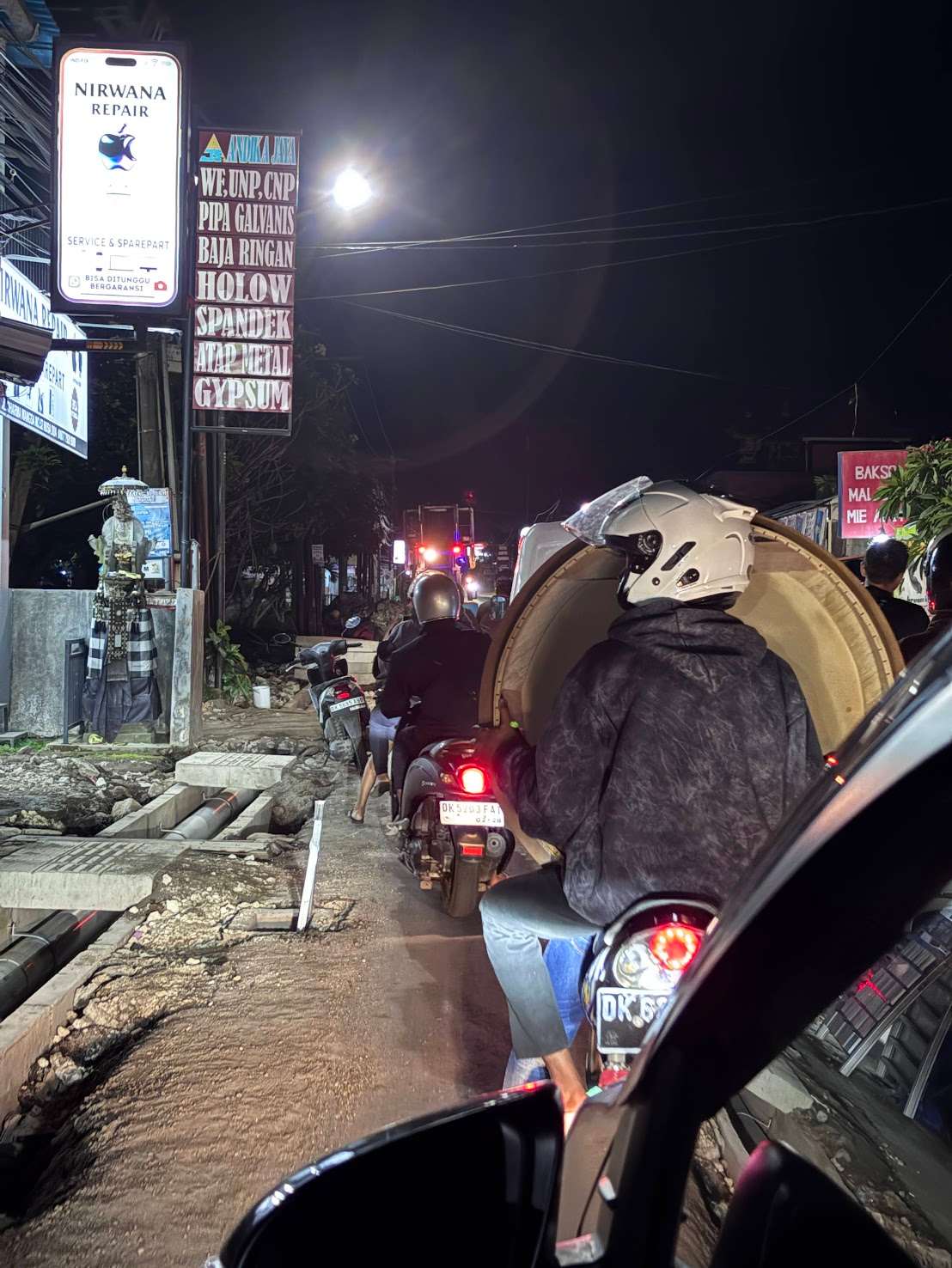
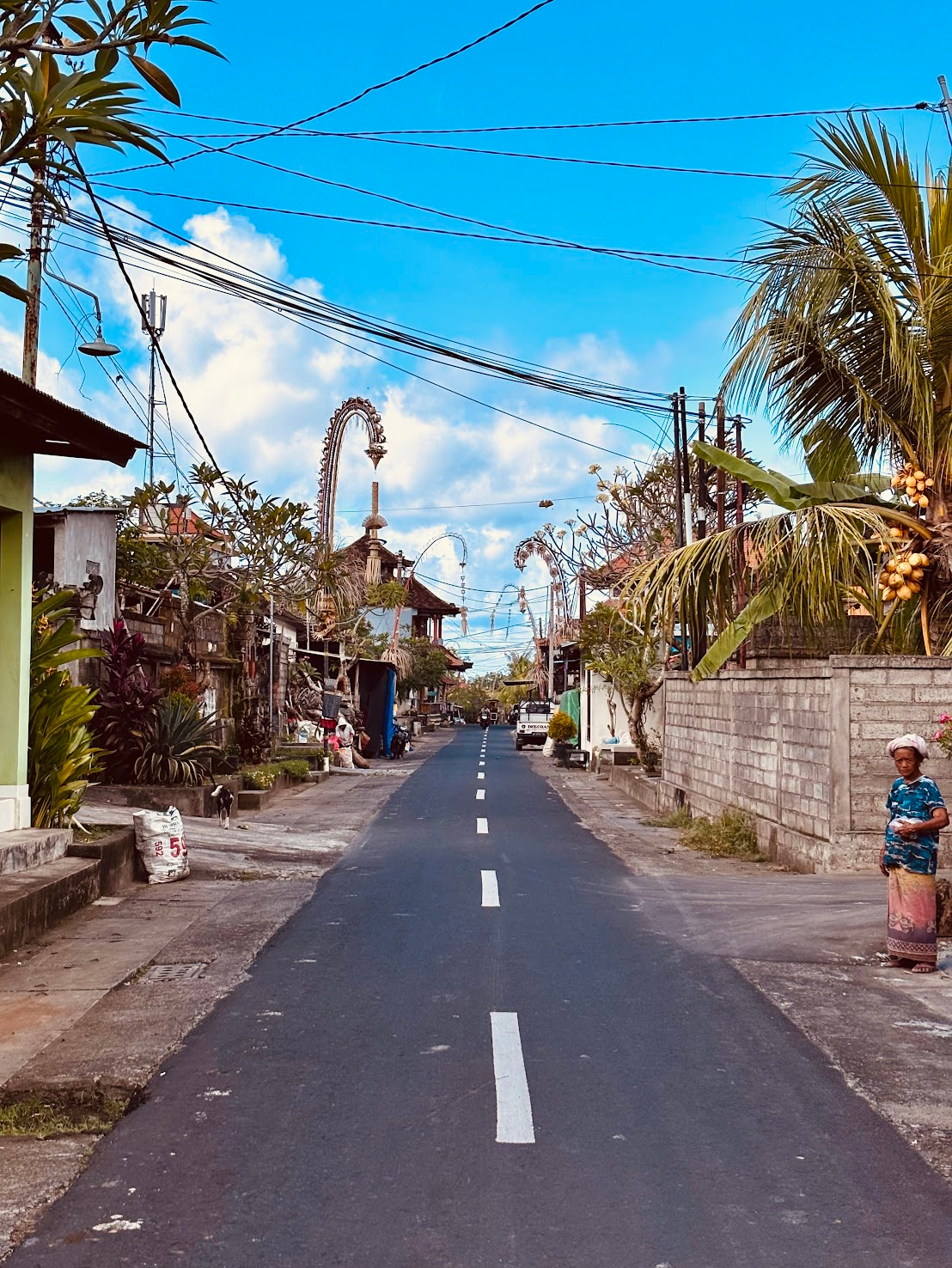
Let’s talk about the infamous Bali traffic, something every first-timer should be ready for.
Firstly, they drive on the left-hand side. Secondly, there is no public transport, so ride-hailing apps or scooters are your main options. Even at pedestrian crossings, cars often don’t stop. Seriously, don’t rely on the zebra! 😅
Traffic can get wild, imagine people walking in the road, dogs, honking, random U-turns. Whether you’re driving or walking, stay alert at all times.
*The second picture took a lot of effort to make 😅
Water & Food Safety: Avoid Bali Belly
You’ve probably heard of Bali Belly, and yes, it’s real. It’s caused by bacteria in the local water that most tourists aren’t used to. My tips for you are:
- Don’t drink tap water. Not even in the shower.
- Use bottled or filtered water to brush your teeth.
- Be cautious with the ice, ask if it’s made with filtered water.
- When it comes to the food, try to stick to cooked food from reputable places.
- Avoid raw or street food, especially on your first trip.
- Wash fruits with bottled water and avoid eating pre-peeled ones.
Monkey Encounters: Cute but Cheeky
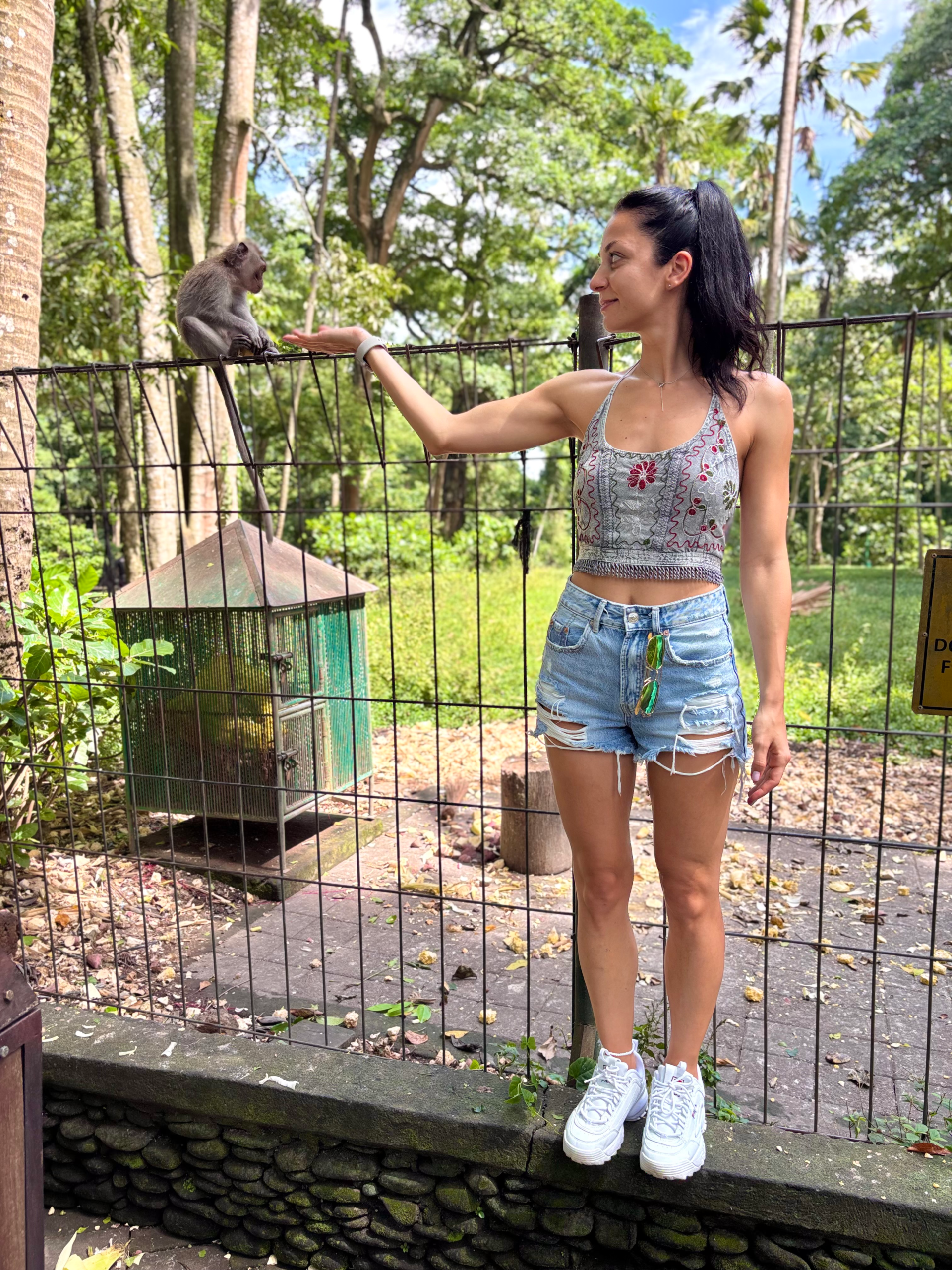
Monkeys in Bali are literally everywhere, especially around temples, streets and some tourist attractions, but also you will see many of them if you decide to go to the Monkey Forest. They’re adorable but can be sneaky and aggressive.
There are few rules the locals have for us to be mindful of the monkeys:
- Don’t look them in the eyes, as they might get aggressive.
- Avoid sudden movements or loud noises.
- Hold on to your stuff, like phones, sunglasses, and shiny things are easy targets.
- Don’t hide food in your bag, they will find it for sure.

Cultural Offerings: Respect the Local Traditions
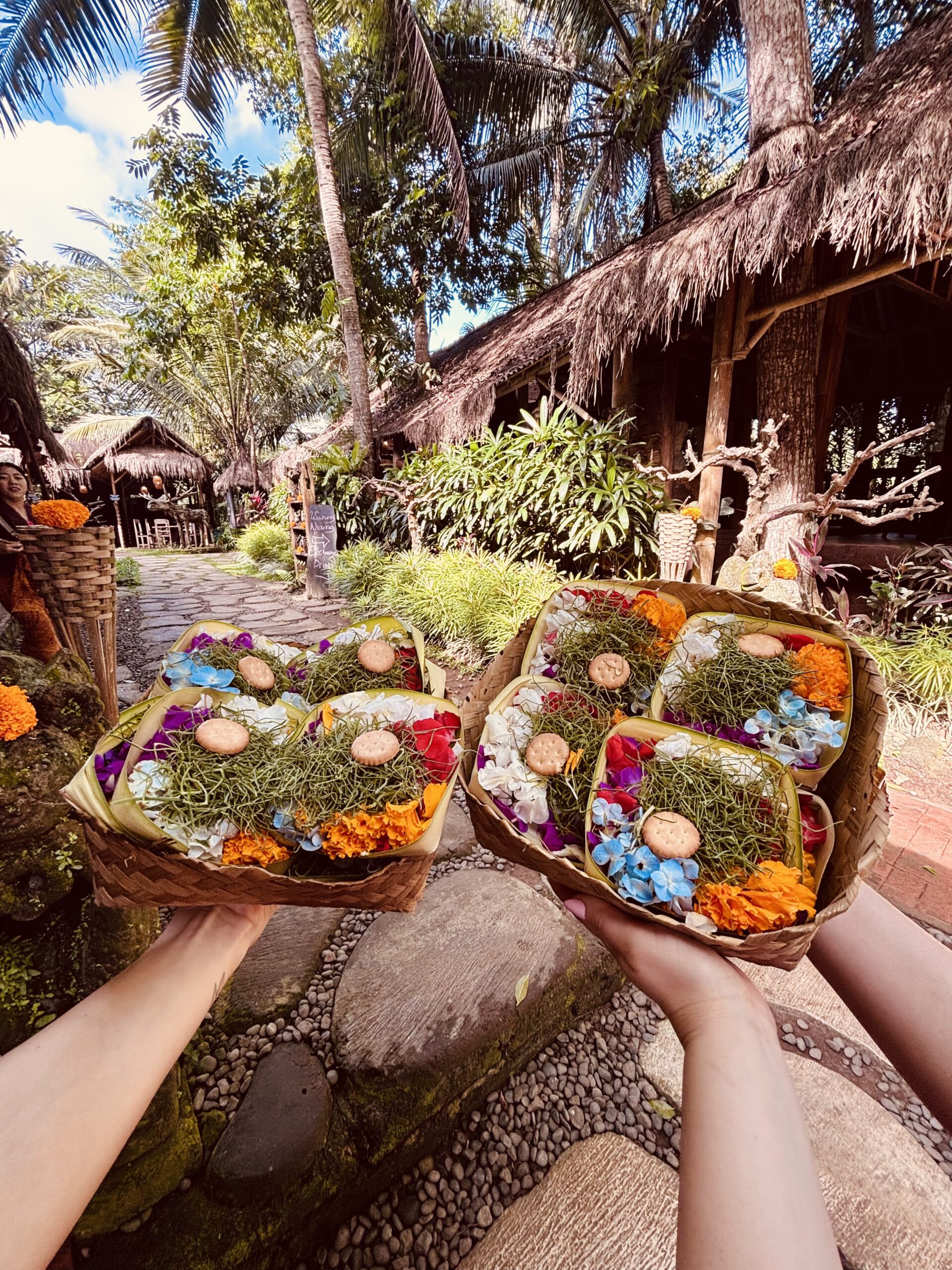
One of the most beautiful parts of Bali’s culture is the daily offerings you’ll see on the streets, sidewalks, and in front of homes and shops.
These little bamboo trays, called canang sari, are filled with flowers, rice, incense, and sometimes candy or crackers. They’re a way of showing gratitude to the gods and maintaining harmony.
Please be mindful of them and don’t step on or over them. Try to avoid disturbing them, even by accident. It’s a small but powerful way to show respect to the local culture.
Bali is absolutely worth the trip, but a smooth experience starts with being prepared. From sorting out your visa and insurance to understanding the traffic and avoiding Bali Belly, I hope this Bali travel guide for first timers helps you feel confident and ready.
Whether you’re hiking waterfalls, learning about temple rituals, surfing at sunrise, or simply chilling with a smoothie bowl, Bali has something magical waiting for you.
Like this post ? Pin for later "Bali Travel Tips for first timers" & "11 Important things to know before visiting Bali"